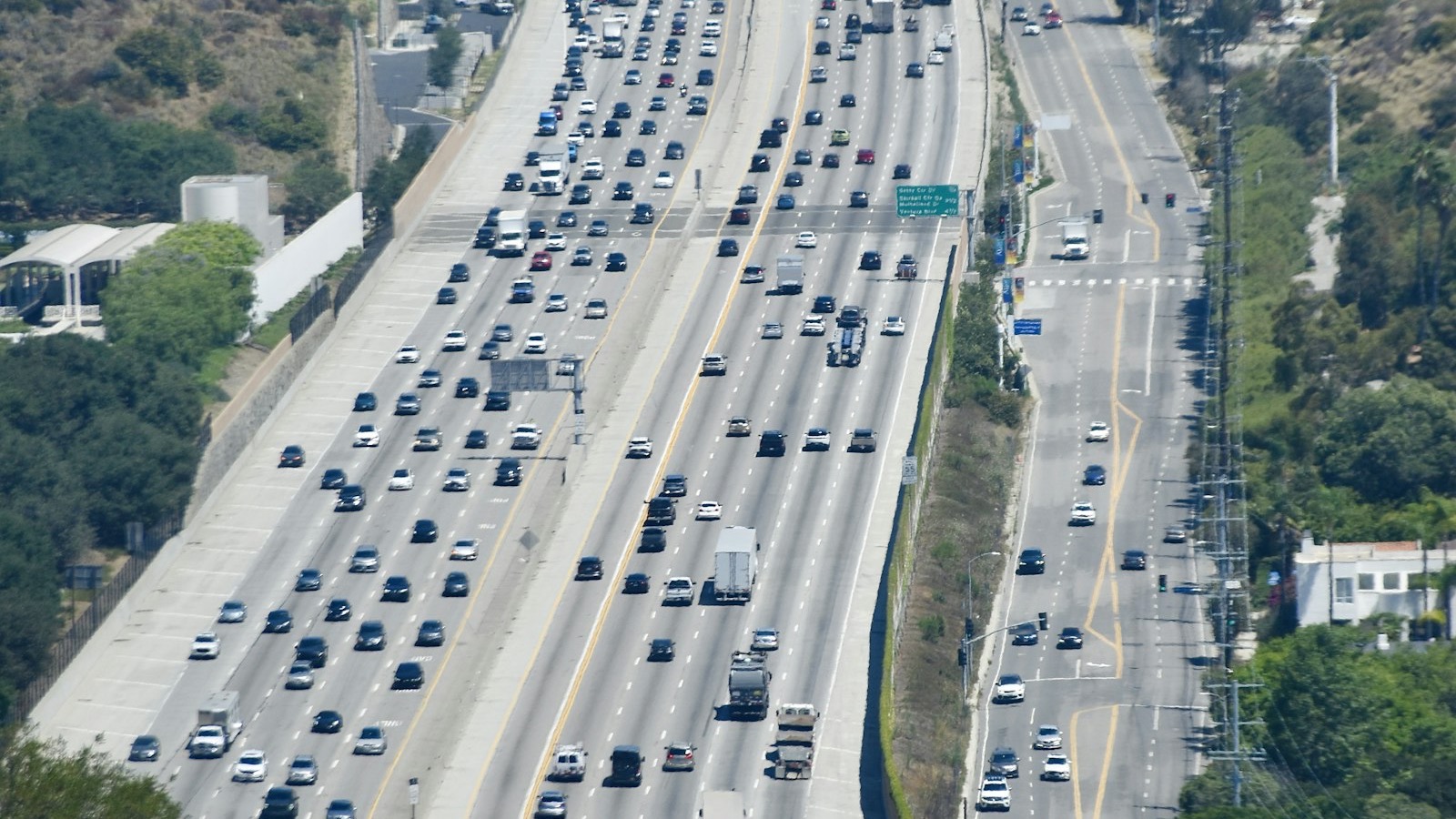
Next time you are stopped at the light where 121 meets Main in Murray, look at the cars around you. Count five. Statistically, one of those drivers is on the road with no insurance at all.
That is not an exaggeration for effect. In Kentucky, 18.7% of drivers are uninsured, according to the Insurance Research Council. The national rate is 14.0%, so we are not just unlucky, we are measurably worse off than most of the country. And for those of us in Calloway County who cross the state line regularly, it gets worse: Tennessee’s uninsured rate is 20.9%, better than one driver in five.
Insurance requirements are laws, and like every law, some people ignore them. The question is who pays when they do. Without the right coverage, the answer is you.
What actually happens when an uninsured driver hits you
Picture the ordinary version of this, because it is ordinary. You are heading home on 94 East and someone pulls out of a gas station without looking. Clearly their fault. Police report says so. Everyone at the scene agrees.
Then you learn they have no insurance, and the neat little system we all assume exists falls apart:
- There is no liability carrier to pay for your car. Normally the at-fault driver’s insurer repairs your vehicle. Here, there is no insurer.
- There is no one to pay for your injuries beyond your own PIP. Kentucky’s required personal injury protection helps with initial medical bills regardless of fault, which is a real head start, but it is modest and runs out quickly in a serious crash.
- Suing them rarely works. You can win a judgment against an uninsured driver, but a driver who could not afford an insurance premium usually cannot pay a judgment either. A court order against someone with no assets is an expensive piece of paper.
Fault and payment are two different things. The other driver can be one hundred percent at fault and zero percent able to pay.
UM and UIM: the coverage that answers for them
Uninsured motorist (UM) coverage exists for exactly this moment. When an uninsured driver injures you, your own UM coverage steps into their shoes and pays what their liability insurance should have paid, up to the limit you chose.
Its sibling, underinsured motorist (UIM) coverage, handles the more common near-miss version of the problem: the at-fault driver has insurance, but only Kentucky’s minimum limits of 25/50/25, and your injuries cost more than their coverage. UIM pays the difference between their too-small limit and your actual damages, up to your UIM limit.
Think of UM/UIM as buying a good policy on behalf of whoever hits you. You cannot make the other driver responsible, but you can make their irresponsibility irrelevant to your family’s finances.
Two practical notes. First, match your UM/UIM limits to your own liability limits; if your health and income are worth protecting, they are worth protecting at full strength. Second, this coverage is one of the better values on an auto policy relative to what it protects, which is why I carry it at real limits myself.
Hit-and-run: when there is nobody to bill
There is a version of this problem that skips the awkward insurance conversation entirely: the other driver leaves. A sideswipe on 641 at night, a backed-into car outside a ballgame at the park, a driver who clips you and decides they would rather not stick around for the police report.
In a hit-and-run, there is no other driver to identify, which means no liability carrier even if they had one. UM coverage is typically what responds to injuries caused by an unidentified driver, and collision coverage is generally what repairs your vehicle. If you carry neither, a stranger’s five-second decision to flee becomes entirely your bill.
This is worth checking on your own policy today: if a hit-and-run happened this weekend, do you know which coverage on your declarations page would respond? If the answer is a shrug, that is fixable in one phone call.
Driving to Paris? The line on the map matters
A lot of our clients cross into Henry County, Tennessee without thinking twice, for work in Paris, family in Puryear, or just the drive down 641 South. Your Kentucky policy travels with you, and so does this problem, except the odds get worse the moment you cross the line. At 20.9%, Tennessee’s uninsured driver rate is higher than Kentucky’s, and Tennessee’s insurance rules differ from Kentucky’s PIP system, so the cushion you are used to at home does not work the same way for the other cars around you.
The takeaway is simple: if your weekly routine includes Tennessee blacktop, UM/UIM is not a nice-to-have on your policy. It is the line that decides whether a crash in Paris is an inconvenience or a financial event.
Check your policy before you need it
Here is the fifteen-minute homework: pull out your declarations page and find your UM and UIM limits. If they are missing, minimal, or a mystery, you have found the weakest point in your coverage, and it is usually one of the cheapest to fix.
As an independent agency, Boswell Insurance shops your auto coverage across multiple carriers, Erie, Progressive, and others, to find strong UM/UIM protection at a price that fits. We will go through it with you line by line, protect first, sell second.
Call us in Murray at (270) 925-1524 or request a quote online. Ten minutes on the phone beats finding out the hard way what the other driver was not carrying.