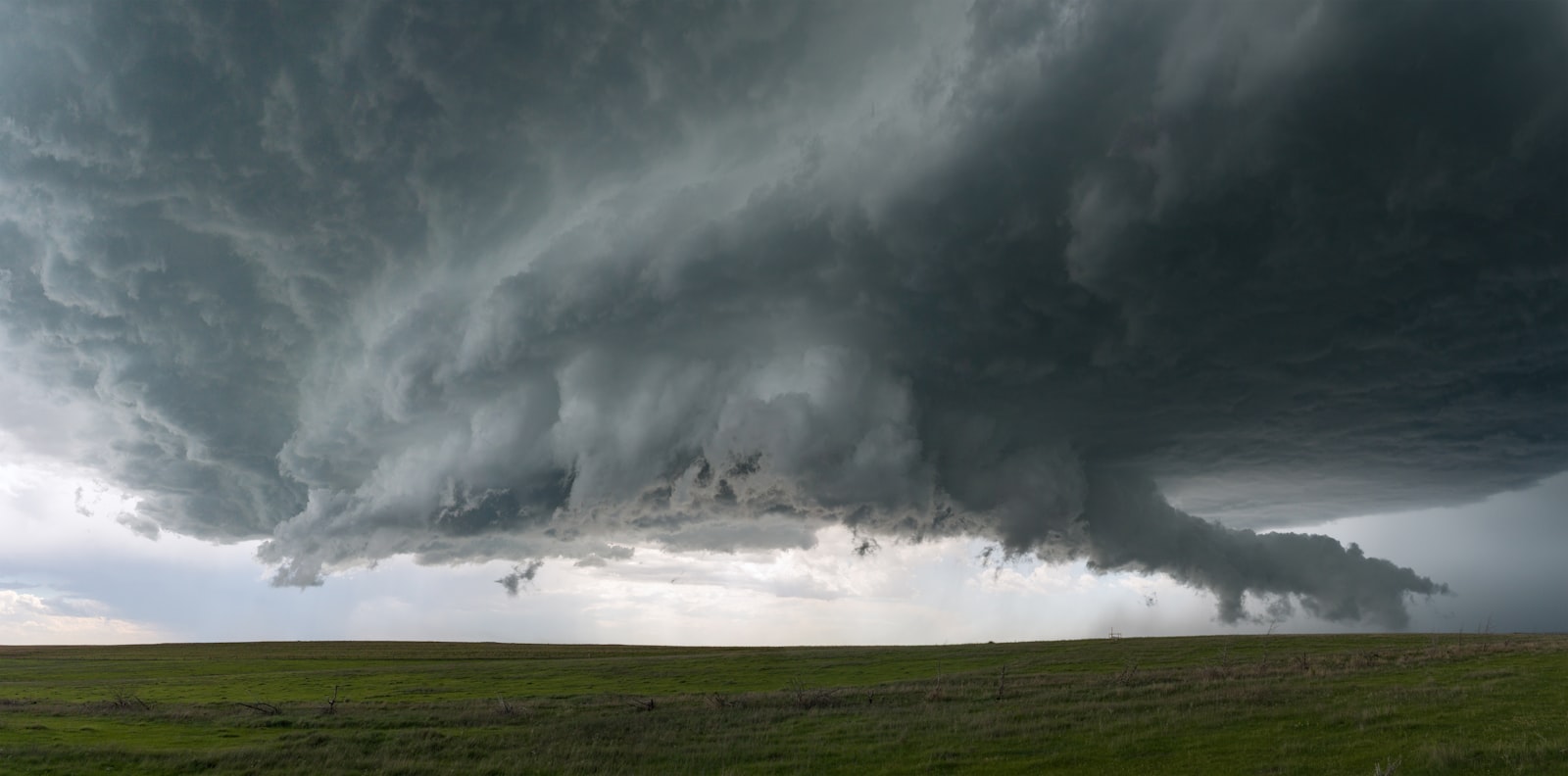
If you lived anywhere near Murray on the night of December 10, 2021, you remember exactly where you were. The sirens, the radar wall on every TV, the phone alerts that would not stop. By morning, Mayfield’s downtown was gone and communities from the Mississippi River to Kentucky Lake were digging out.
That night is the reason this article exists. Tornado season in Western Kentucky is not a hypothetical, and the time to find out whether your insurance is ready is now, not while you are standing in your driveway looking at a hole in your roof.
What December 2021 taught us
The National Weather Service in Paducah rated the Mayfield tornado an EF-4, with 190 mph peak winds and a 165.7-mile path. In Graves County alone, it damaged or destroyed over 3,778 residences, 183 commercial properties, and 103 other buildings.
And that was not the only tornado on the ground that night. A second long-track tornado, rated EF-3 with 160 mph peak winds and a 122.7-mile path, tore through the region and clipped the Fort Donelson National Battlefield area of extreme southeastern Calloway County. The same outbreak produced EF-4 damage at the Cambridge Shores community on the western shore of Kentucky Lake in Marshall County. All told, the National Weather Service put the damage from that outbreak at up to $3.5 billion.
Here is the part that matters for your policy: this was not one unlucky town. It was Graves, Marshall, and Calloway counties in a single night. If you live in the Boswell Insurance service area, you live in tornado country.
Does homeowners insurance cover tornado damage?
Yes. Wind is a covered peril on standard homeowners policies, and a tornado is wind at its worst. If a tornado damages your roof, walls, windows, or the belongings inside, your homeowners policy is the coverage that responds. It also typically pays additional living expenses, the hotel and meal costs if your home is unlivable while it is repaired.
But “covered” is not the same as “covered well.” Three things decide how a tornado claim actually goes for you: your deductible structure, your dwelling coverage limit, and the exclusions you may not know are there.
Wind and hail deductibles: read this part twice
Many Kentucky homeowners policies now carry a separate wind and hail deductible that is different from the deductible that applies to, say, a kitchen fire. Two things to check on your declarations page:
- Is it a flat dollar amount or a percentage? A percentage deductible is calculated from your dwelling coverage amount, not from the size of the claim. On a larger home, that can mean a much bigger out-of-pocket number than you were picturing when you signed up.
- When does it apply? Wind and hail deductibles apply to exactly the kind of damage a tornado or a severe thunderstorm causes, which around here is the most likely claim you will ever file.
There is nothing wrong with a percentage deductible. It is often the trade that keeps a premium affordable. But it should be a choice you made on purpose, not a surprise you discover after the storm. If you cannot say off the top of your head what your wind deductible is, that is worth a five-minute phone call.
Is your dwelling coverage enough to rebuild?
The median owner-occupied home value in Calloway County is $183,200, but market value is not the number that matters after a tornado. What matters is the cost to rebuild, and rebuilding costs move with lumber, labor, and demand. After a widespread event like December 2021, thousands of families need contractors and materials at the same time, and prices reflect that.
Ask your agent two questions: is my dwelling limit based on a current reconstruction estimate, and does my policy include extended or guaranteed replacement cost? That second feature adds a cushion above your limit for exactly the post-disaster scenario where rebuilding costs spike.
The flood exclusion hiding inside storm season
The same storm systems that spin up tornadoes also dump inches of rain, and here is the exclusion that catches people: homeowners insurance does not cover flood damage. Water that rises from the ground up, an overflowing creek, backed-up storm drainage, runoff pouring into a basement, is a flood in the eyes of your policy, even if it happened during the same supercell that took shingles off your roof.
Flood coverage is a separate policy, and around Kentucky Lake, low-lying parts of Calloway County, and anywhere near a creek that gets angry in a spring storm, it deserves a real conversation rather than an assumption that you are fine.
A storm-season prep checklist
Insurance is the financial half of tornado readiness. Here is the short list I walk through with my own family every spring:
- Know your deductibles. Find the wind/hail deductible on your declarations page and translate it into an actual dollar figure.
- Verify your dwelling limit. Ask for a reconstruction cost estimate, not a market value guess.
- Ask about flood. Get a quote and decide with real numbers instead of ignoring it.
- Build a home inventory. Walk each room with your phone camera, narrate what you see, open drawers and closets, and store the video in the cloud. Ten minutes now saves weeks of claim frustration later.
- Photograph your roof and exterior. Pre-storm photos make wind damage claims dramatically smoother.
- Have a shelter plan. Interior room, lowest floor, helmets for the kids, shoes by the safe spot. Your policy can rebuild a house; the plan protects the people in it.
Get a real answer before the sirens do
You do not need to become an insurance expert. You need someone local who will pull up your actual policy and tell you in plain English what happens if next April’s storm has your address on it. That review costs nothing and takes about fifteen minutes.
Boswell Insurance Agency is an independent agency here in Murray, which means we can shop your coverage across multiple carriers instead of forcing one company’s answer. Call (270) 925-1524 or request a quote online, and we will make sure your policy is as ready for storm season as the rest of your house.